

What are the customs and traditions of Qingming Festival
Tree planting: During this period, the climate is rainy, which is very suitable for plant growth, and the survival rate of small saplings is high. People will spontaneously plant trees and afforestation to plant hope for spring.
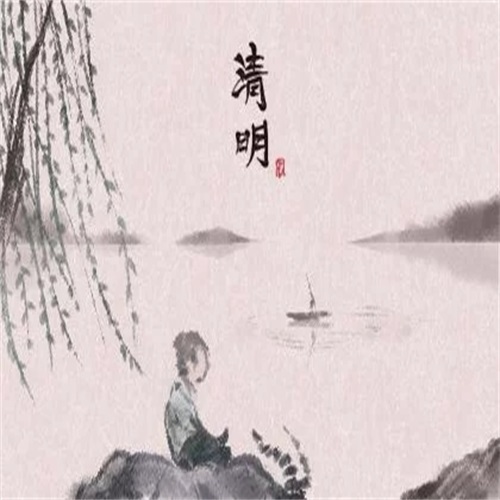
Willows: In the old days, on the festive day, branches of the willow tree were inserted on the gates of every household. Children would weave wicker hats on their heads or on their plackets to symbolize a new beginning.
Kite flying: It is one of the traditional activities of Qingming Festival. It was called paper kite in ancient times. It is still popular today. Some areas will organize a kite festival. When children are flying, some will cut the thread in their hands to let the kite fly freely into the blue sky. It is said to have the effect of warding off evil spirits and eliminating disasters and bringing good luck.
Why is this solar term going out?
Since ancient times, there has been a habit of going out to enjoy the spring during the Ching Ming season. At this time, the sun is shining, the temperature is good, the trees are budding, the grassland is also green, and there are beautiful scenery everywhere, which is very suitable for outings. In recent years, according to different climates, various parts of the country have launched some flower festivals and picking festivals to provide more colorful activities for people to go out and play.
what do you eat
: It is the food that people love to eat in the southern region. It can be used as an offering to ancestors, or it can be made and shared with the whole family.
Runbing: This type of food is popular in places like Shaoxing, Taizhou, Zhejiang, and southern Fujian. It is said that the fillings made from various dishes are wrapped into a pillow with thin cooked noodles, and then dipped in various types according to personal preference. Sauce.
Zi Tu Mo: Also known as Lao Mo, it is a traditional food for Qingming Festival in Shanxi Province. It uses red beans, black beans, etc. to make the shell, usually wrapped in eggs or red dates. The legend is named in memory of the loyal minister Jie Zitui, and it is easy to preserve, so it is very popular.