

Twelfth lunar month
The reason why it is called "La" is because "La" is the name of "sacrifice" used to worship ancestors and hundreds of gods in ancient times. It was fixed on the 8th day of December during the Northern and Southern Dynasties. The Han folks all hunted animals and held large sacrifices to worship the gods. Ancestor, pray for longevity, avoid disaster and welcome prosperity. This kind of memorial ceremony is called "hunting sacrifice".
Because "lace" and "hunting" are interchangeable, "hunting sacrifice" is written as "lace sacrifice", so the year-end December is called the twelfth lunar month. This custom originated in the Qin and Han dynasties. By 221 BC, Emperor Qin Shihuang unified China and ordered the formulation of a calendar. The month of the end of winter and the beginning of spring was called "La", and the eighth day of December was called "La Ri". The designation of "La Day" as the "Eighth Day of the Twelfth Lunar Month" began in the Southern and Northern Dynasties, and has gradually evolved into a well-known folk festival-the Laba Festival.
Custom
In the elderly, the "Spring Festival" refers specifically to the beginning of spring. New Year's Day in the lunar calendar is called "Zhengdan Festival", which is later commonly known as the New Year. Northerners call it "New Year's Day" and New Year's Eve as "New Year's Eve". The period from preparation to completion is called "New Year Pass", collectively referred to as "New Year".
Generally speaking, there are more than 20 days in the preparation stage before. From "Laba" to New Year's Eve, northerners are very busy these days.
After the tenth day of the new year, I began to sell the guardian painting door god, hanging thousand, gold and silver foil, burning paper, and so on.
After the 20th, the sale of sugar melons, sugar biscuits, rice bamboo joint cakes, Guandong sugar and other things was prepared for the "sacrifice stove."
After the 25th, the goods are complete and the assortment is dazzling, preparing for the New Year`s Eve, and the prices have risen relatively. The Jingshi proverb says that "water and soil are three-thirds expensive in the twelfth lunar month."
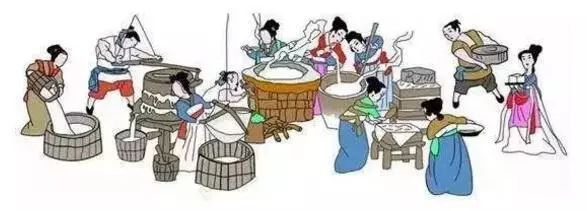
In northern my country, there is a saying, "Don't be greedy for children, kids, Laba is the New Year", and Laba means the beginning of the New Year. During the Laba Festival, the northern regions are busy peeling garlic to make vinegar, soaking laba garlic, and eating laba noodles and laba porridge.
Laba porridge is a kind of porridge made with various ingredients during the Laba Festival, also called Qibao Wuwei porridge. Eat Laba porridge to celebrate the harvest, which has been passed down to this day. In ancient times, on the eighth day of December in the lunar calendar, there was a custom among Chinese folk to eat "laba porridge" ("laba rice" in some places). In Henan, Laba Congee, also known as "Fan for Everyone", is a festive food custom to commemorate the national hero Yue Fei.
"Yanjing Sui Shi Ji · Laba Congee": "Laba congee people use yellow rice, white rice, river rice, millet, water chestnut rice, chestnuts, red river beans, peeled jujube paste, etc., cooked in boiling water, and dyed red peach kernels, almonds, and melon seeds for external use , Peanuts, hazel, pine nuts, white sugar, brown sugar, and trivial grapes for some dyeing.". Like Laba Rice, Laba Congee is a relic of ancient wax sacrifices.
"The Sacrifice and the Special Sacrifice of the Suburbs" says that the wax sacrifice is "in the year and December, all things are gathered together, and everything is so delicious." Laba porridge is combined with all kinds of food and cooked in a pot with rice, which is to gather all things and reconcile thousands of things. Spiritual meaning.
Twelfth lunar month song
Twenty-three, sugar melon sticky
Twenty-four, sweep the house
Twenty-five, grinding tofu
Twenty-six, go cut the meat
Twenty-seven, slaughter the rooster
Twenty-eight, send the noodles
Twenty-nine, go to drink
Stay overnight at 30
Twist and twist on the first day of the new year
Twenty-third of the twelfth lunar month
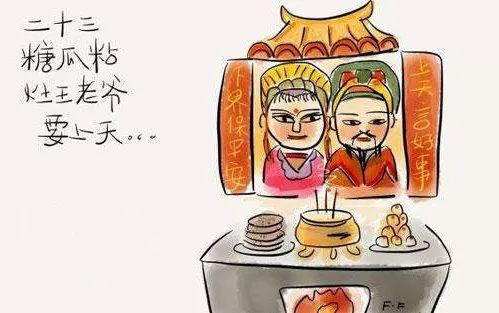
The twenty-third of the twelfth lunar month, commonly known as the New Year`s Eve, is a traditional Chinese festival, that is, the traditional stove day. During the new year, the main folk activities include sweeping dust and worshiping stoves. Sacrifice stoves have been in our country for thousands of years. The belief in stove gods is a reflection of the Chinese people's pursuit of the dream of "surplus food and clothing". Xiaonian is usually regarded as the beginning of a busy year, which means that people begin to prepare new year goods, sweep dust, sacrifice stoves, etc., and prepare to pass a good year cleanly, expressing people's good desire to say goodbye to the old and welcome the new year, and welcome prosperity and happiness.
Folk sacrifice stoves originated from the ancient custom of worshiping fire. The responsibility of the kitchen god is to take charge of the stove, manage the food, and later expand to investigate the good and evil in the world to reduce the good and evil. Zheng Xuan`s commentary "Book of Rites·Faith" says: "(The kitchen god) lives in the world, and the inspector has a small time, and the condemnation is also." This shows that at least in the Han Dynasty, the custom of sacrificing stoves has been circulated in the central plains of northern my country.
Twenty-fourth of the twelfth lunar month
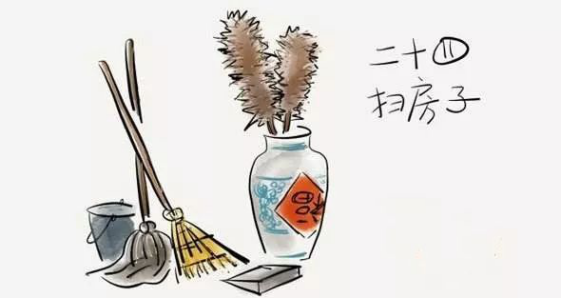
On the 24th of the twelfth lunar month, the custom of dusting and sweeping houses has a long history. According to folklore: because of the homophony of "dust" and "Chen", the Chinese New Year sweeping dust has the meaning of "removing the old and putting on the new", and its intention is to sweep out all the "poor luck" and "bad luck", trusting people to break the old and create the new. The wish and the prayer of leaving the old and welcoming the new.
Twenty-fifth of the twelfth lunar month
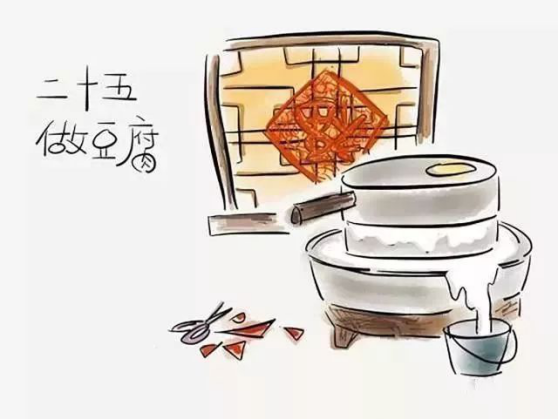
On the twenty-fifth of the twelfth lunar month, tofu is made by grinding mills. The pronunciation of "fu" and "fu" are similar. Making tofu means "harvest happiness and blessing in the New Year". In ancient times, the Han folklore activities on this day mainly included picking up the Jade Emperor, Zhao Tian silkworm, Thousand Lantern Festival, and chaos Sui Sui. Nowadays, most people do not make tofu by themselves. Instead, they often put the cut "Fu" upside down on the window or door, which expresses the same meaning, hoping that "happiness, blessing" will come to the home.
Twelfth lunar month twenty six
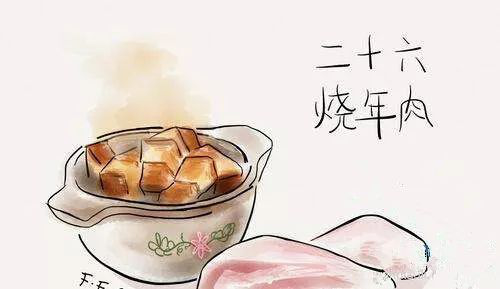
On the twenty-sixth lunar month, the traditional Han folk custom of the Spring Festival is "stewed big meat". A folk proverb says: "On the 26th of the twelfth lunar month, kill pigs and cut the meat of the New Year", which is the main preparation for the meat on this day. "Nian Rou" pays attention to eating braised pork. The meat itself represents the meaning of wealth. The braised pork can even more express the prosperity and prosperity of the coming year. A bowl of steaming braised pork with meaty aroma is a lot of people. Looking forward to this day.
Twelfth lunar month 27
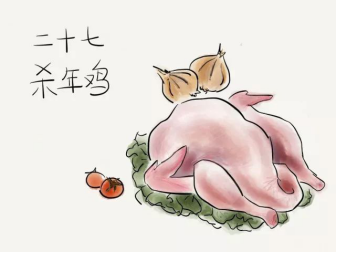
Kill the chicken
There is a saying in the folk rhymes: "Kill a chicken on the twenty-seventh lunar month", because "chicken" is the same as "good luck", meaning auspicious and auspicious, and killing chickens on the twenty-seventh lunar month is also exquisite. The stewed chicken is not eaten on the twenty-seventh day, but can only be eaten on New Year's Eve. Moreover, it cannot be eaten all at once and discarded. It needs to be eaten every day to make a fortune.
Gandaji
The new year's rumor said: "On the 27th of the twelfth lunar month, slaughter chickens and drive the big fair." On this day, in addition to slaughtering their own poultry, they also have to go to the store to go to the market and centrally purchase. Such as: firecrackers, spring couplets, magical horses, incense candles, burning paper, beef and mutton, various gifts for children, various head flower ornaments for girls, etc. All the items needed for the Spring Festival are being purchased, so the bazaars around this day are very prosperous.
Guilt
In some rural areas in the south, the twenty-seventh day of the twelfth lunar month is the last bathing and washing time before New Year`s Eve. A few days after New Year's Eve, every family stopped washing their clothes. Bathing in the twenty-sixth lunar month is called "washing fulu", while the twenty-seventh of the twelfth lunar month is called "washing guilt disease". There is a saying in my hometown called "twenty-seven washing guilt disease, twenty-eight washing sloppy", which means that it can be washed away. The bad luck and bad luck of a year, wash away the disease, put on new clothes, and welcome the arrival of the new year, twenty-six is too early, twenty-eight is too late, twenty-seven is just right.
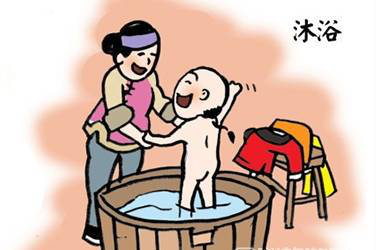
In some rural areas in the north, this rule is not to take a bath, but to wash your feet. It is said that on this evening, the woman should wash her feet well with boiling water and wipe her feet clean without leaving any traces of water. The local people have a saying: "On the 27th of the twelfth lunar month, all aunts and aunts wash their feet. One who does not wash their feet will cause pus to cause water for seven months."
These customs are mostly aimed at improving personal hygiene before the New Year, and the reason for washing clothes is somewhat special. In rural areas, clothes are dried in their own yard. If you wash your clothes after 27, there will be a lot of water in the yard. The firecrackers on the night of New Year`s Eve will not be easy to set off. When someone comes, the yard is full of clothes and it doesn't look good. It is convenient to wash it in advance.
Twelfth lunar month twenty-eight
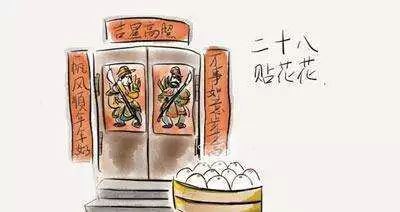
On the 28th of the twelfth lunar month, most places have to rush to make noodles for the New Year on this day. Whether it is making noodles or making buns, every household must start preparing the staple food for the New Year. In the past, social development was low, and there was no modern and convenient baking powder. Ordinary noodles were easy to spoil if they were made a few days in advance. Therefore, on the 28th day of the twelfth lunar month, the noodles were made to prepare the staple food from the first to the fifth day of the first lunar month. This is also the old custom that steamed buns should not be steamed from the first to the fifth day.
On the 28th of the twelfth lunar month, in addition to the pasta, there are also "appliques", that is, post New Year pictures, spring couplets and window grilles. Among them, the custom of pasting spring couplets originated from the ancient "peach talisman", because the ancients used peach wood as a wood to ward off evil spirits. Later, with the advent of papermaking, the custom of posting Spring Festival couplets with red paper instead of peach wood appeared.
Twelfth lunar month twenty-ninth
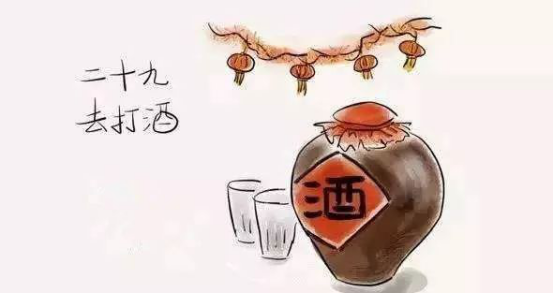
On the twenty-ninth of the twelfth lunar month, the day before New Year`s Eve, it is called "Little New Year's Eve." Burning incense outdoors, called "Tianxiang", usually takes three days.
New Year's Eve
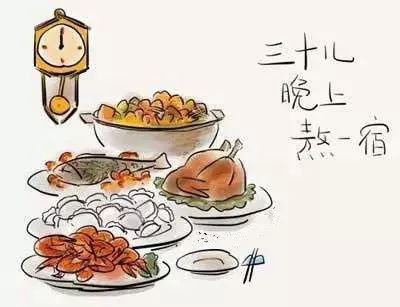
New Year`s Eve, New Year`s Eve, is a time when the new and the old alternate. The activities on the New Year`s Eve are also varied: resigning, keeping watch, and welcoming the new year... As soon as midnight arrives, the twelfth lunar month is over and the new year begins.
New Year's Eve has entered the timing!
Knowing these New Year customs,
Do you think the New Year is full?
Tell your friends and relatives around you,
Let them also feel the taste of this year!